Article: Wearing Your Values: A Guide to the Conservation Movement and Wildlife Protection
Wearing Your Values: A Guide to the Conservation Movement and Wildlife Protection
Imagine a future where polar bears struggle to find stable ice, snow leopards lose the mountain habitats they depend on, and elephants face increasing pressure from habitat fragmentation. These are not distant possibilities, they are challenges unfolding today. Around the world, wildlife populations are facing unprecedented threats, making conservation one of the defining responsibilities of our generation.
The modern conservation movement has evolved far beyond scientific research and protected parks. What once focused primarily on preserving landscapes has become a global effort to protect biodiversity, restore ecosystems, and prevent species loss at an alarming scale. Today, success depends not only on researchers and conservation organizations but also on everyday people who choose to support positive environmental change.
At Wear What Matters, we believe meaningful action can begin with simple choices. From the products we purchase to the messages we share, every decision has the potential to contribute to a healthier future for wildlife and the planet.
Tracing the Roots of the Global Conservation Movement
The origins of the conservation movement can be traced back to efforts aimed at protecting natural landscapes and establishing national parks. Early conservation leaders recognized that industrial expansion and resource extraction threatened some of the world’s most valuable ecosystems.
Over time, conservation priorities expanded. Protecting land alone was no longer enough. Scientists began documenting rapid declines in wildlife populations, habitat destruction, and ecosystem imbalance. As a result, the conservation movement shifted toward addressing the broader biodiversity crisis and preventing large-scale species extinction.
Today, conservation efforts focus on preserving entire ecosystems while protecting vulnerable species that play essential roles within them. Polar bears remain one of the most recognized symbols of climate-related habitat loss. Snow leopards continue to face threats from shrinking habitats and human-wildlife conflict. Elephants encounter increasing pressure from habitat fragmentation and resource competition.
Organizations, communities, and purpose-driven brands now work together to create solutions that combine environmental protection with public awareness. This collaborative approach has transformed conservation from a specialized field into a global responsibility.
For those seeking to support brands aligned with environmental values, Wear What Matters shares its mission through its dedicated conservation initiative available at Wear What Matters Conservation Mission.
How to Support Wildlife Conservation From Home
Many people wonder about how to support wildlife conservation without traveling to remote habitats or working in environmental science. The truth is that meaningful support often starts with everyday actions.
1. Educate and Share
Awareness remains one of the most powerful conservation tools available. By learning about endangered species and sharing credible information with friends, family, and online communities, individuals help expand public understanding of environmental challenges.
Whether discussing habitat loss, climate change, or species recovery programs, informed conversations can inspire action and encourage broader support for wildlife protection.
2. Practice Mindful Consumerism
Every purchase sends a message. Consumers increasingly choose brands that prioritize sustainability, transparency, and measurable environmental impact.
Supporting businesses that contribute directly to conservation initiatives allows individuals to align spending with values. Wear What Matters demonstrates this approach by combining wildlife-inspired artwork with a mission-driven purpose. Visitors can learn more through the official website at Wear What Matters Home Page.
Mindful consumerism is becoming an important driver of the modern conservation movement, helping fund programs and increase awareness simultaneously.
3. Back the Frontline Organizations
Conservation success requires resources. Established organizations such as the World Wildlife Fund (WWF) manage critical projects that protect habitats, support species recovery, and strengthen environmental resilience.
Financial contributions, fundraising initiatives, and support for conservation-focused partnerships help provide the funding needed to maintain long-term impact. Wear What Matters actively supports this mission by integrating conservation funding into its business model.
The New Face of Eco-Activism: Creative Expressions of Change
The traditional image of activism often involves protests, petitions, and organized campaigns. While these efforts remain important, modern Eco-activism has expanded into many forms of everyday participation.
People now advocate for environmental causes through education, creative projects, sustainable purchasing decisions, community engagement, and digital storytelling. The goal is no longer limited to large public demonstrations. Instead, environmental advocacy increasingly becomes part of daily life.
One of the most effective emerging concepts is “Artivism,” the combination of art and activism. Through visual storytelling, artists can create emotional connections that statistics alone often cannot achieve. Wildlife-inspired artwork helps people connect with species they may never encounter directly while encouraging conversations about conservation.
This cultural shift has strengthened the conservation movement by making participation more accessible to individuals from all backgrounds.
Wear What Matters: Turning Canvas into Conservation
Wear What Matters was founded on a simple yet powerful belief: art can inspire action.
The story begins with Jerry, an 83-year-old artist who refused to remain silent after learning about the growing threats facing polar bears and other vulnerable species. His artwork became a vehicle for awareness, advocacy, and tangible support.
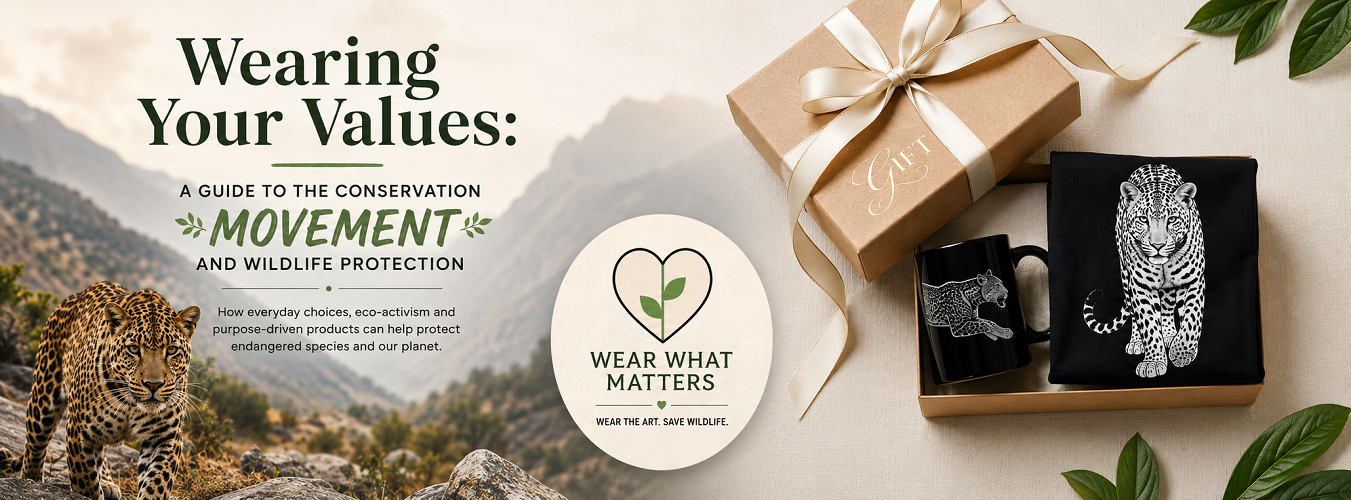
Today, Wear What Matters transforms original wildlife-inspired designs into apparel and art products that help communicate an important message. Every hoodie, t-shirt, and art print serves as a visible reminder that conservation matters.
The brand was created to make participation in the conservation movement simple and accessible. Rather than asking supporters to dramatically change their lifestyles, Wear What Matters provides a practical way to align everyday purchases with meaningful impact.
A key part of this mission is transparency. Wear What Matters donates 10% of every purchase directly to the World Wildlife Fund (WWF), helping support wildlife conservation efforts around the world.
Customers who explore the collection through Wear What Matters Store or review the mission page at Our Conservation Movement Mission can see how apparel, art, and advocacy work together to create measurable support.
By wearing meaningful designs, supporters help spark conversations, increase awareness, and contribute to funding initiatives that protect vulnerable species. This approach demonstrates how the conservation movement continues evolving through creativity, commerce, and community participation.
Frequently Asked Questions
1. What is the conservation movement?
The conservation movement is a global effort focused on protecting wildlife, preserving ecosystems, restoring habitats, and preventing biodiversity loss through education, policy, research, and public participation.
2. Why is wildlife conservation important?
Wildlife supports healthy ecosystems that provide clean water, food security, climate regulation, and economic benefits for communities worldwide.
3. Can individuals really make a difference?
Yes. Consumer choices, donations, education, and advocacy collectively influence conservation outcomes and support organizations working on the ground.
4. How does Wear What Matters contribute to conservation?
Wear What Matters combines wildlife-inspired art with purpose-driven apparel and donates 10% of every purchase to the WWF.
5. Why are polar bears, snow leopards, and elephants often highlighted?
These species represent broader environmental challenges and serve as important indicators of ecosystem health.
6. Is conservation only the responsibility of scientists?
No. Governments, nonprofits, businesses, communities, and individuals all play essential roles in supporting long-term conservation success.
Conclusion
The future of wildlife depends on the choices we make today. Protecting vulnerable species and preserving healthy ecosystems requires collective action, sustained awareness, and practical support. The conservation challenges facing polar bears, snow leopards, elephants, and countless other species cannot be solved by scientists alone.
Wear What Matters demonstrates how everyday decisions can contribute to meaningful impact. By supporting conservation-focused initiatives and choosing products that align with environmental values, individuals become active participants in a global effort to protect wildlife.
Browse the Last Kind Collection today: wear the art, spark the conversation, and fund the frontline fight for wildlife survival.
Wear What Matters
- Phone: 3174423379
- E-mail: admin@wearwhatmatters.org
- Address: 8064 Lynch Ln, Indianapolis, Indiana, 46250, USA